Deciphering Damaged Landscapes
Deciphering Damaged Landscapes: Florida's Ecosystem of Damage Insurance
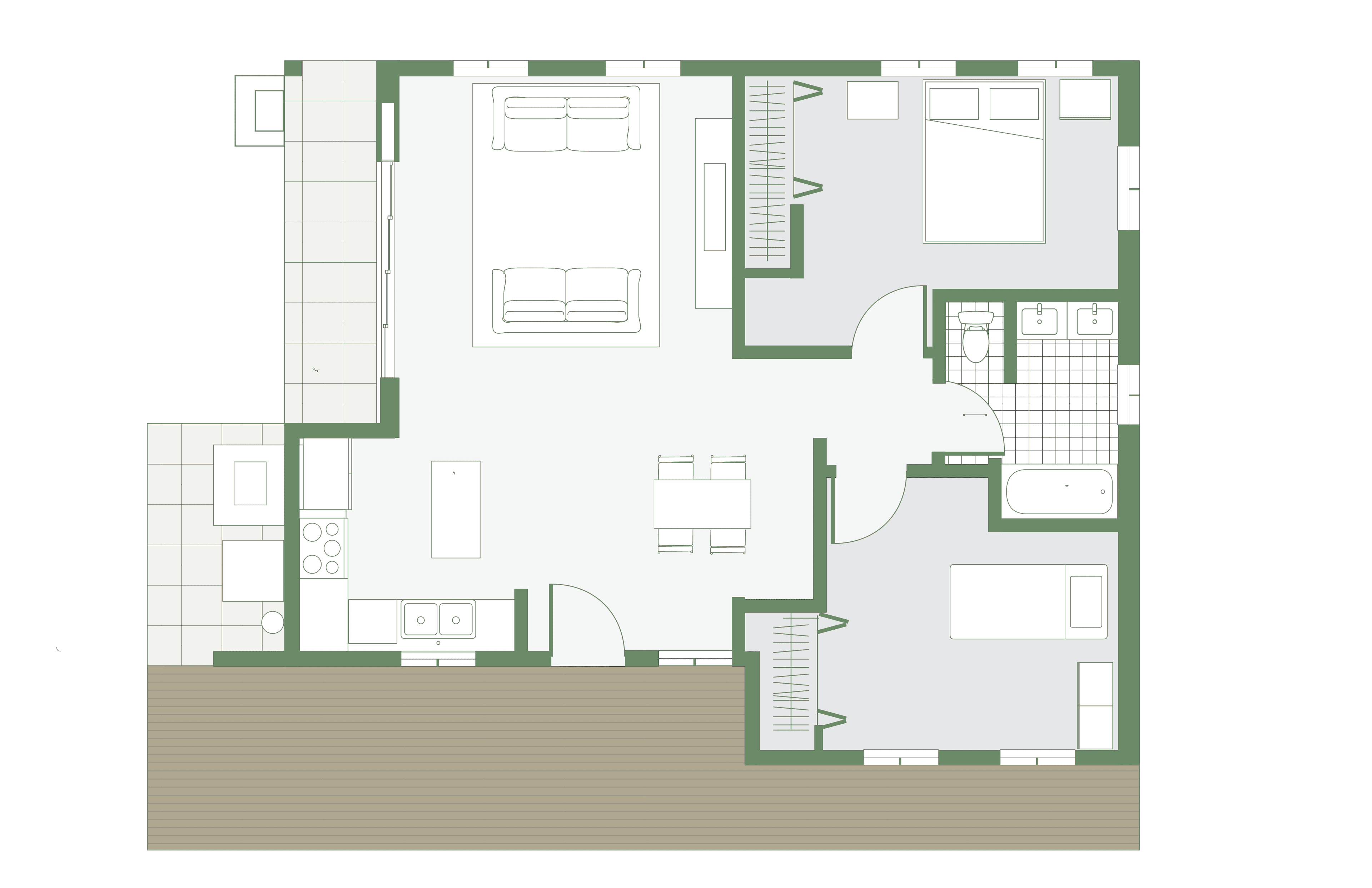
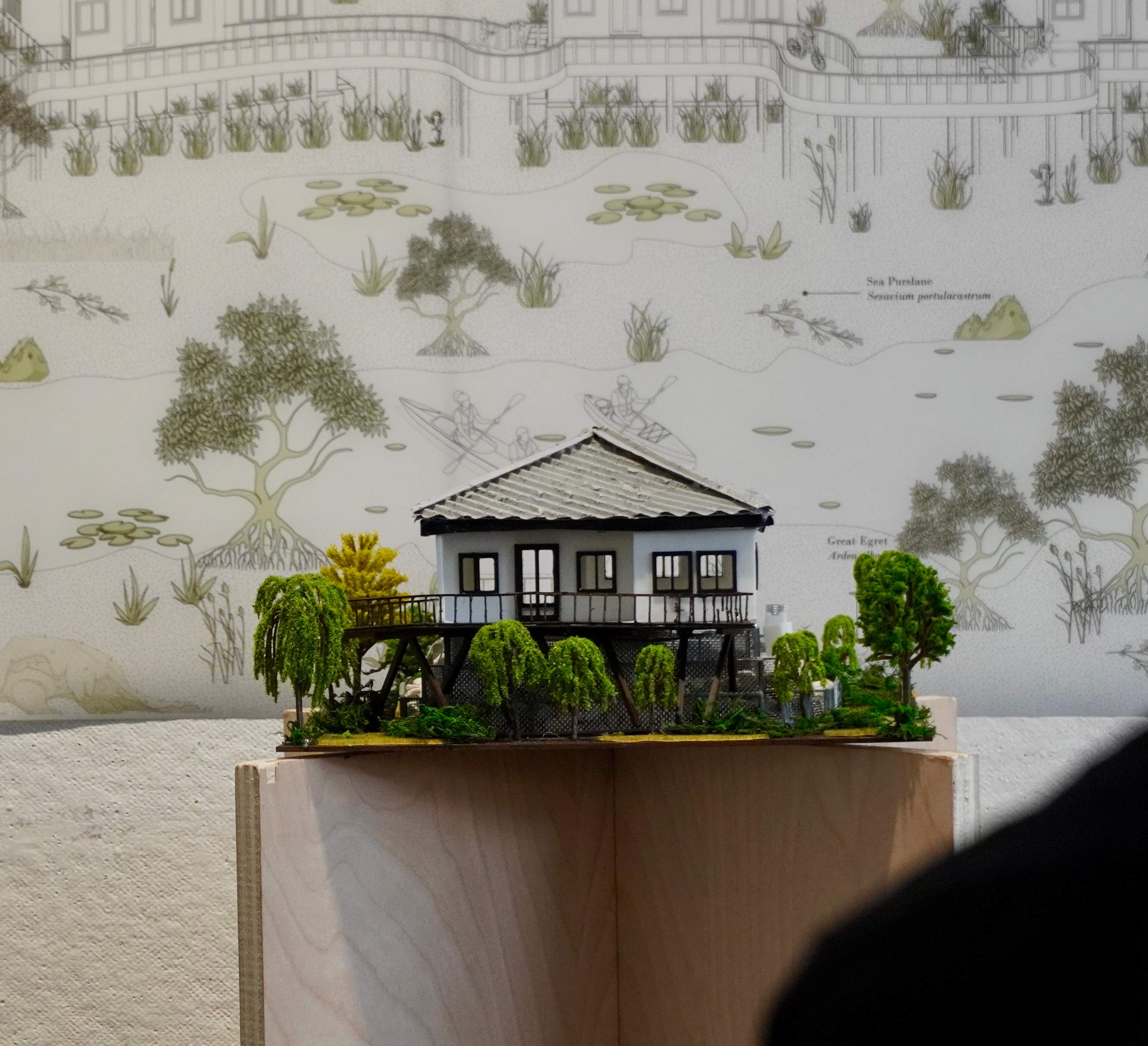
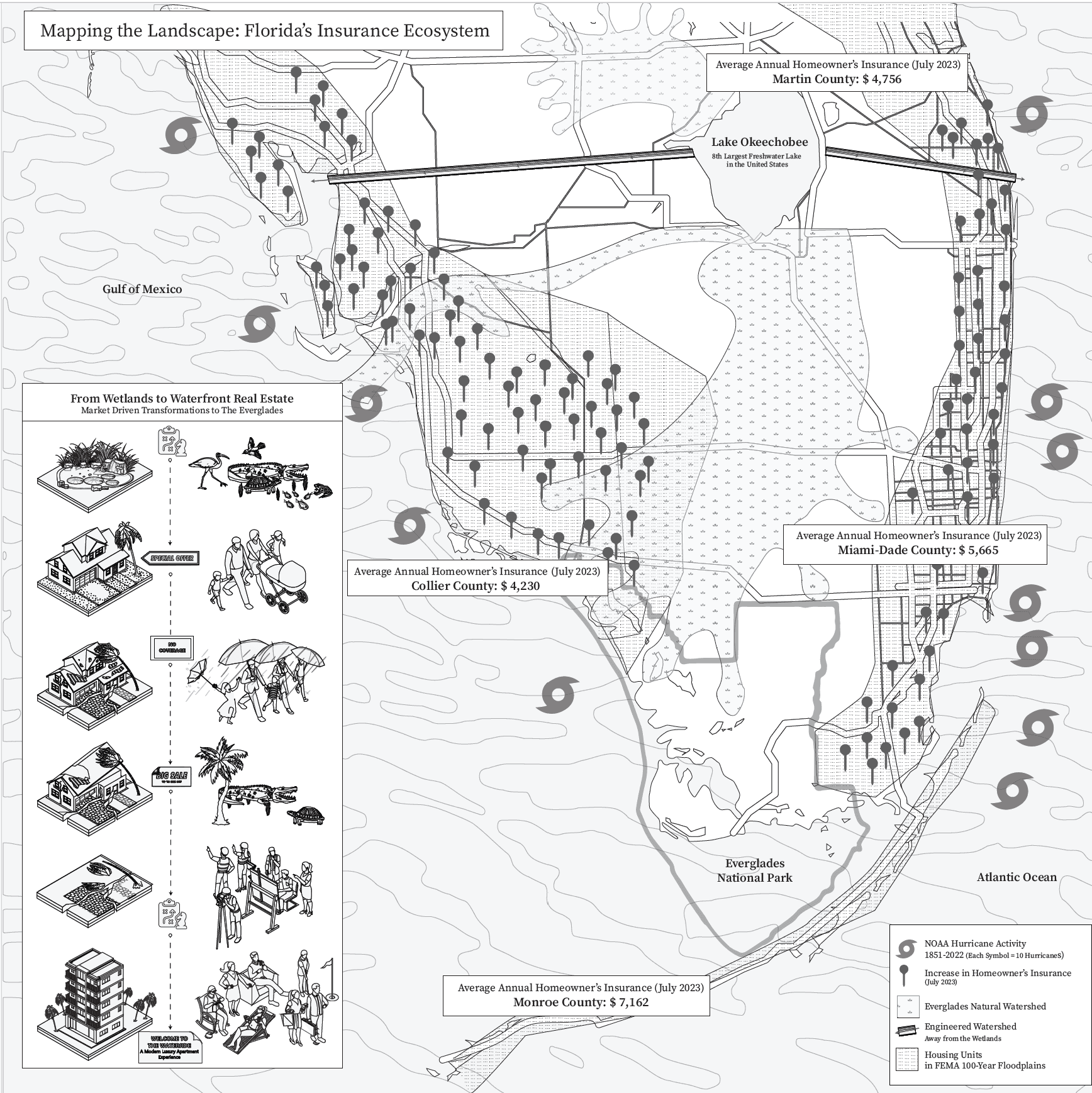
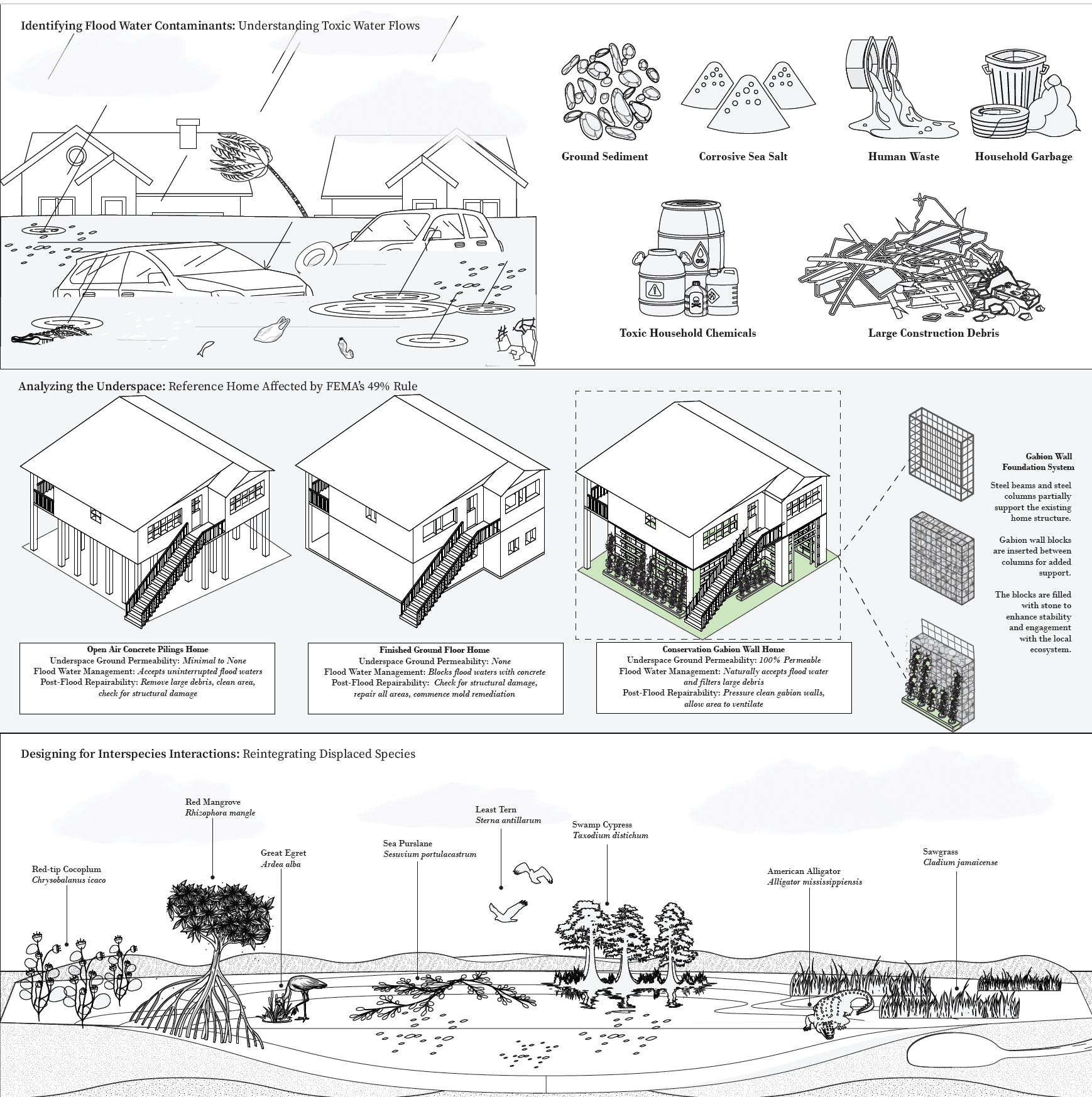
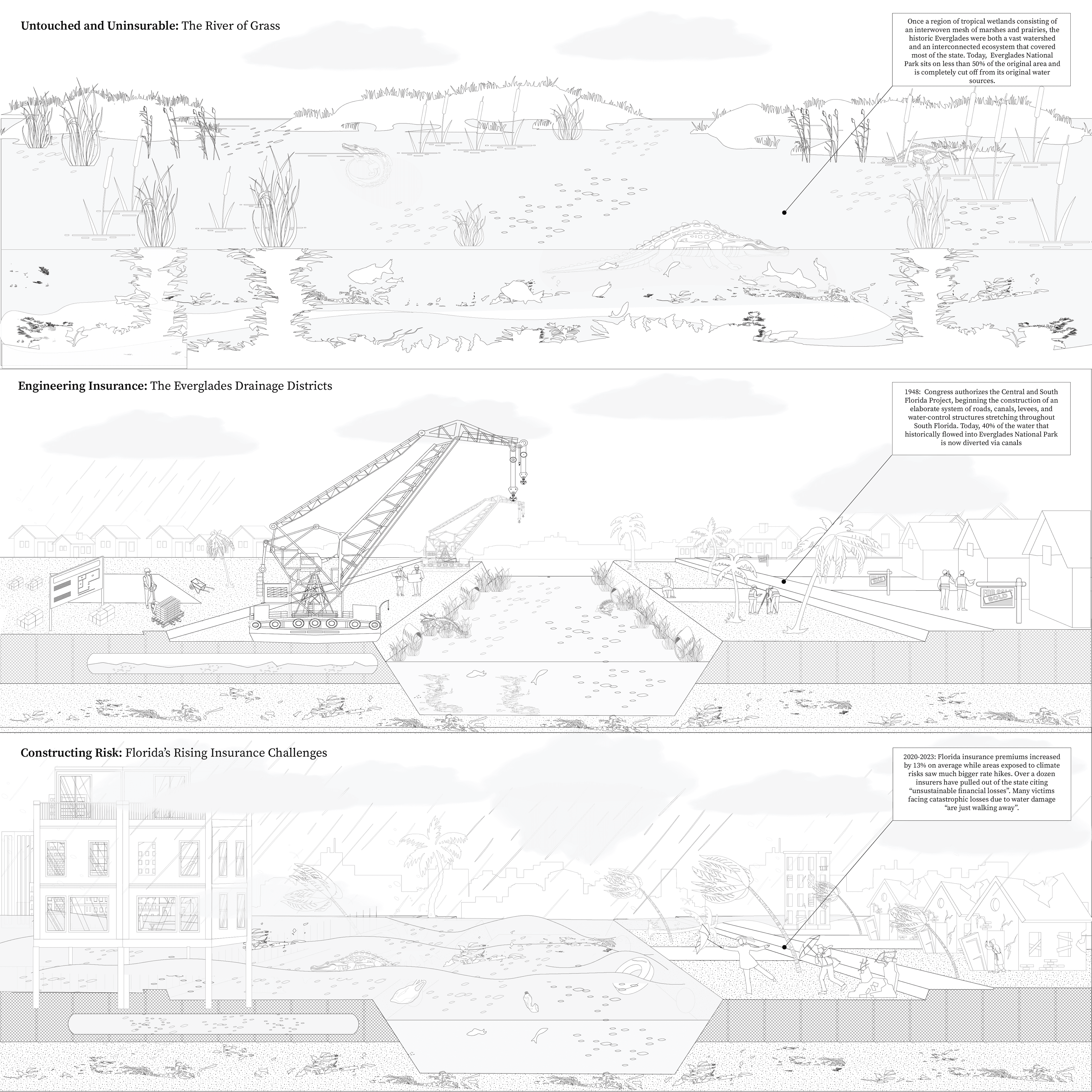
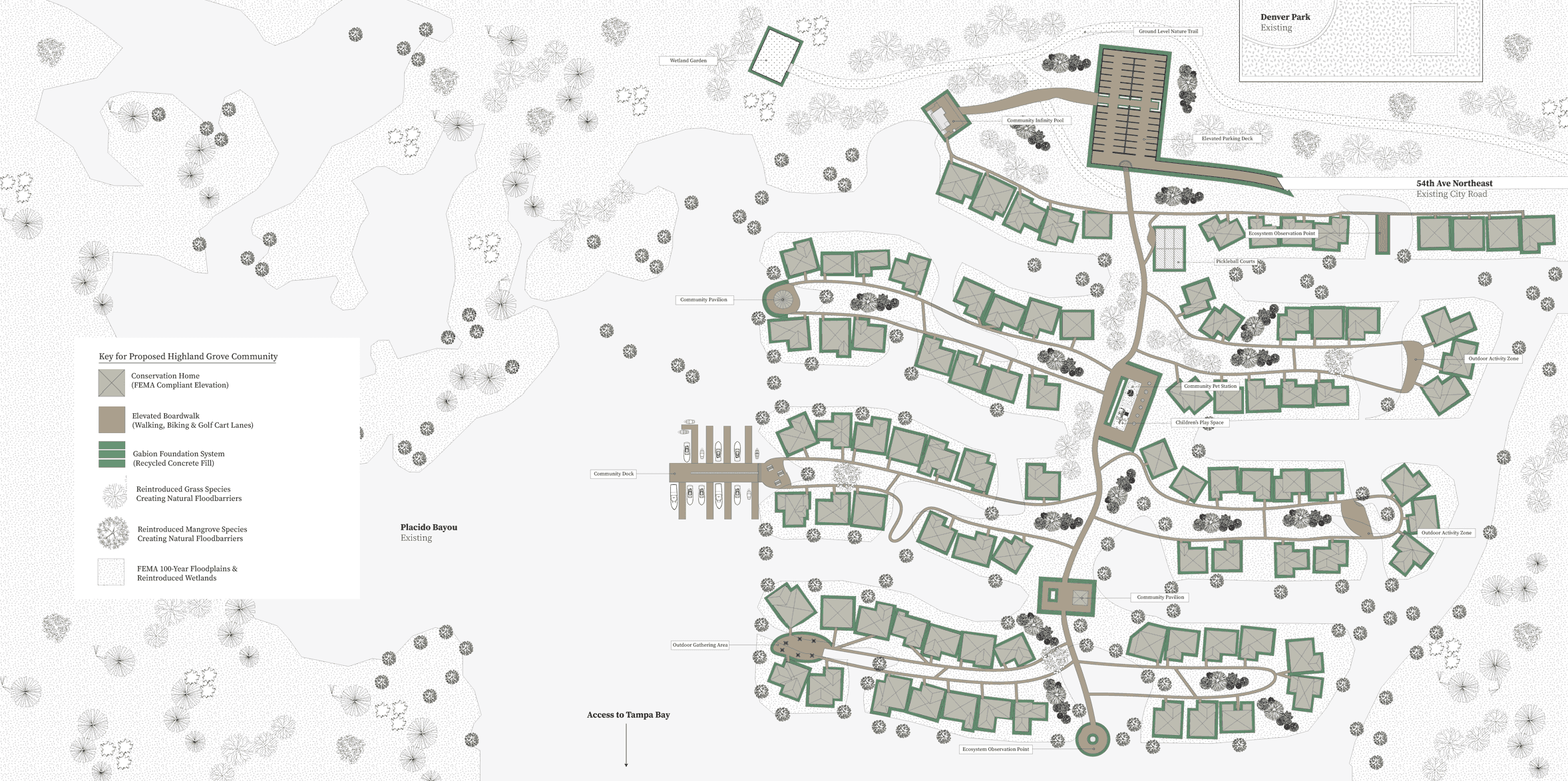
This project reexamines residential life in St. Petersburg, Florida, in response to increasing flood vulnerability and rising insurance pressures. FEMA has ruled that damaged CMU block homes in the Shore Acres neighborhood must be demolished or lifted and elevated 12 feet in accordance with FEMA floodplain standards. This project operates through a neighborhood-wide adaptive reuse approach on existing single-family homes, and elevated them above the flood plain on a network of gabion foundation walls.
These gabions below are filled with reclaimed concrete rubble, and its permeability allows floodwaters to move below the homes. Over time, the gabion foundations themselves support native vegetation and habitat, positioning residential architecture as a possible living component of the local ecosystem, instead of an extractive one. At the neighborhood scale, conventional infrastructure is reconfigured. Damaged roads and sea walls are removed and replaced with elevated boardwalks with integrated neighborhood amenities. Over time, the gabion foundations themselves support native vegetation and habitat, positioning residential architecture as a living component of the local ecosystem. Together, these strategies propose a transferable, low-cost framework for flood-prone neighborhoods worldwide, reframing adaptation as an additive and regenerative process rather than a defensive one.
Course | Core II Architecture Studio |
Date | Spring 2025 |
Instructor | Christopher Gardner |
Tools used | Adobe Creative Cloud, Rhino3D, 3D Printing |
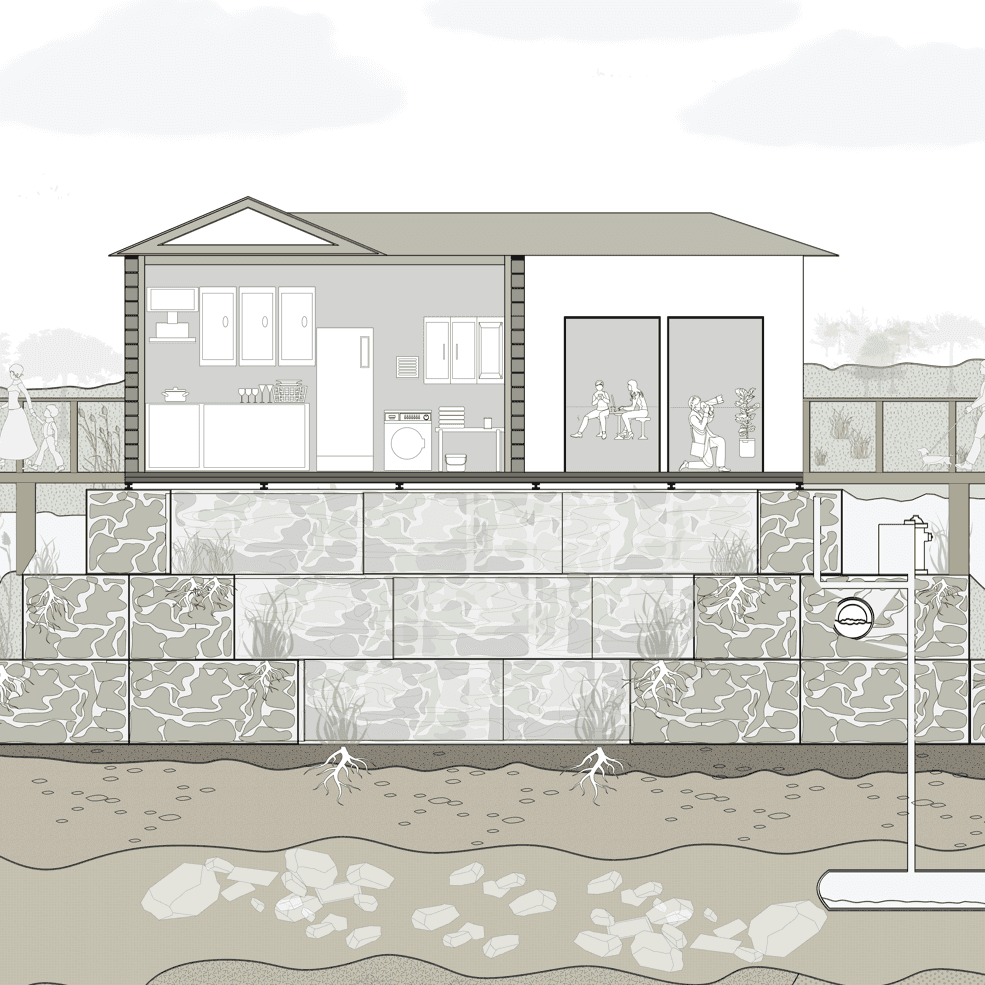
Ecology & The Single Family Home
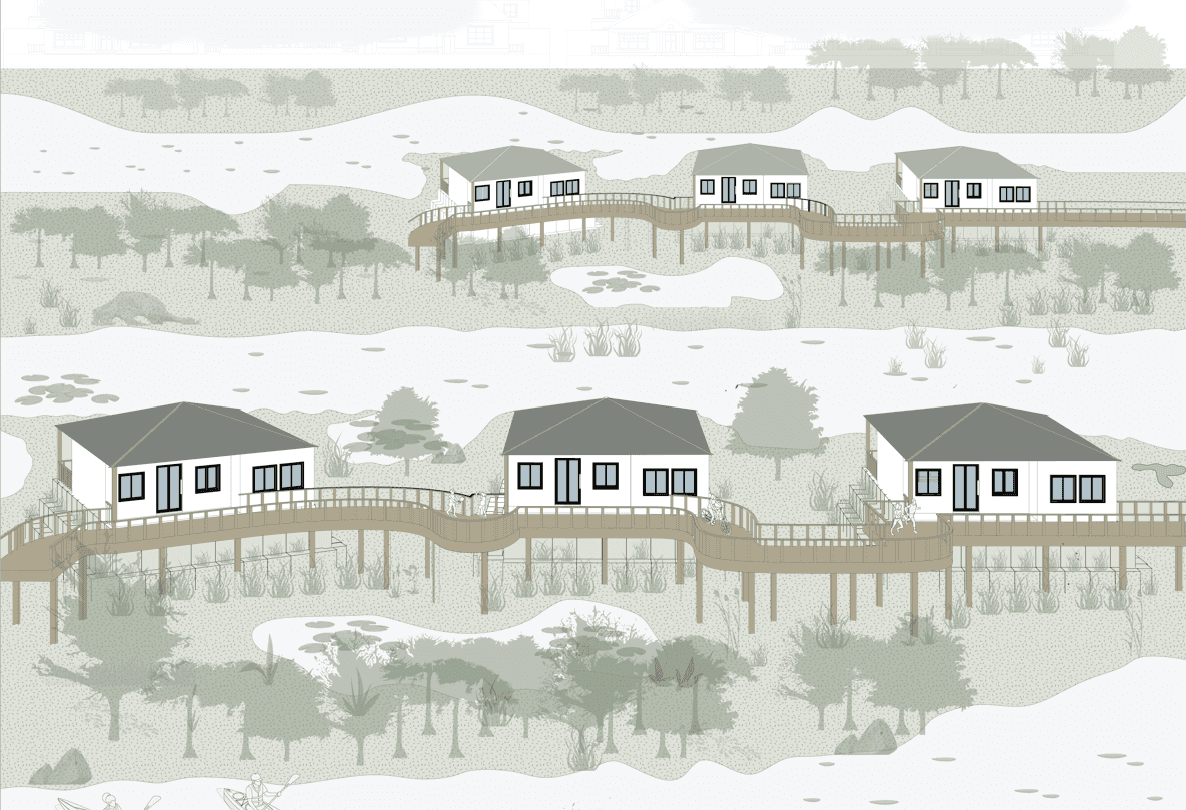
The homes establish a 12-foot conservation zone at the base, creating a protected ecological buffer before the residential plane begins. This elevated threshold separates habitation from sensitive ground conditions while maintaining environmental continuity.
Porous gabion foundations anchor the structure, allowing water, soil, and habitat systems to move through the base. The home engages directly and safely with the surrounding ecology, balancing residential life with ecological regeneration.