New York City Affordable Housing
Connections Through the Core
Proposed East Village Residential Community
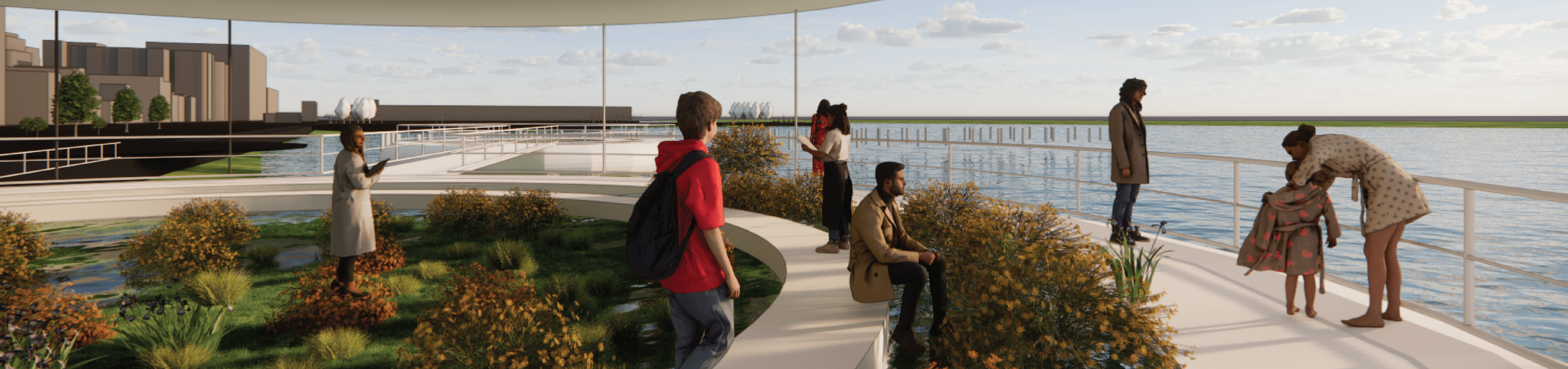
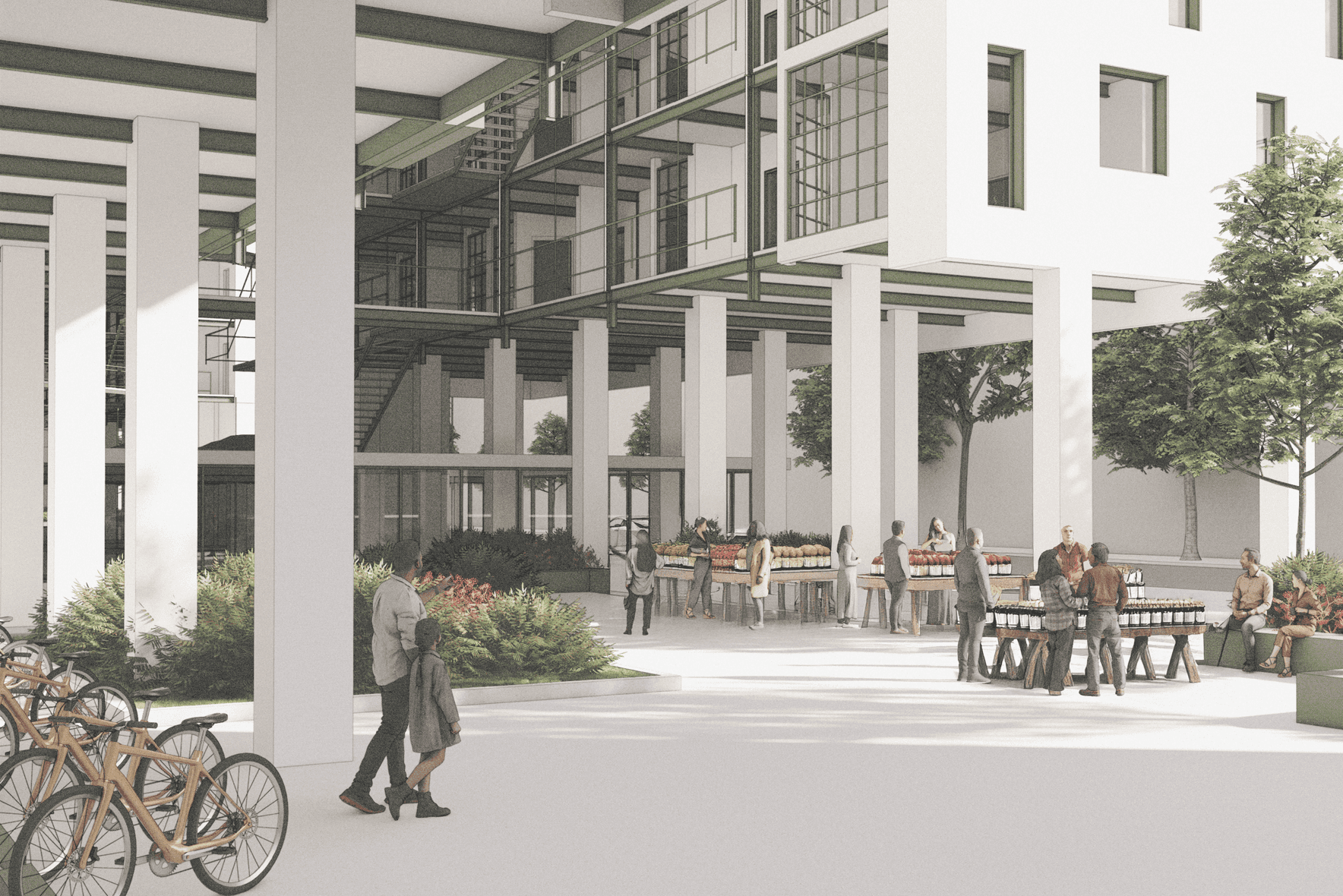
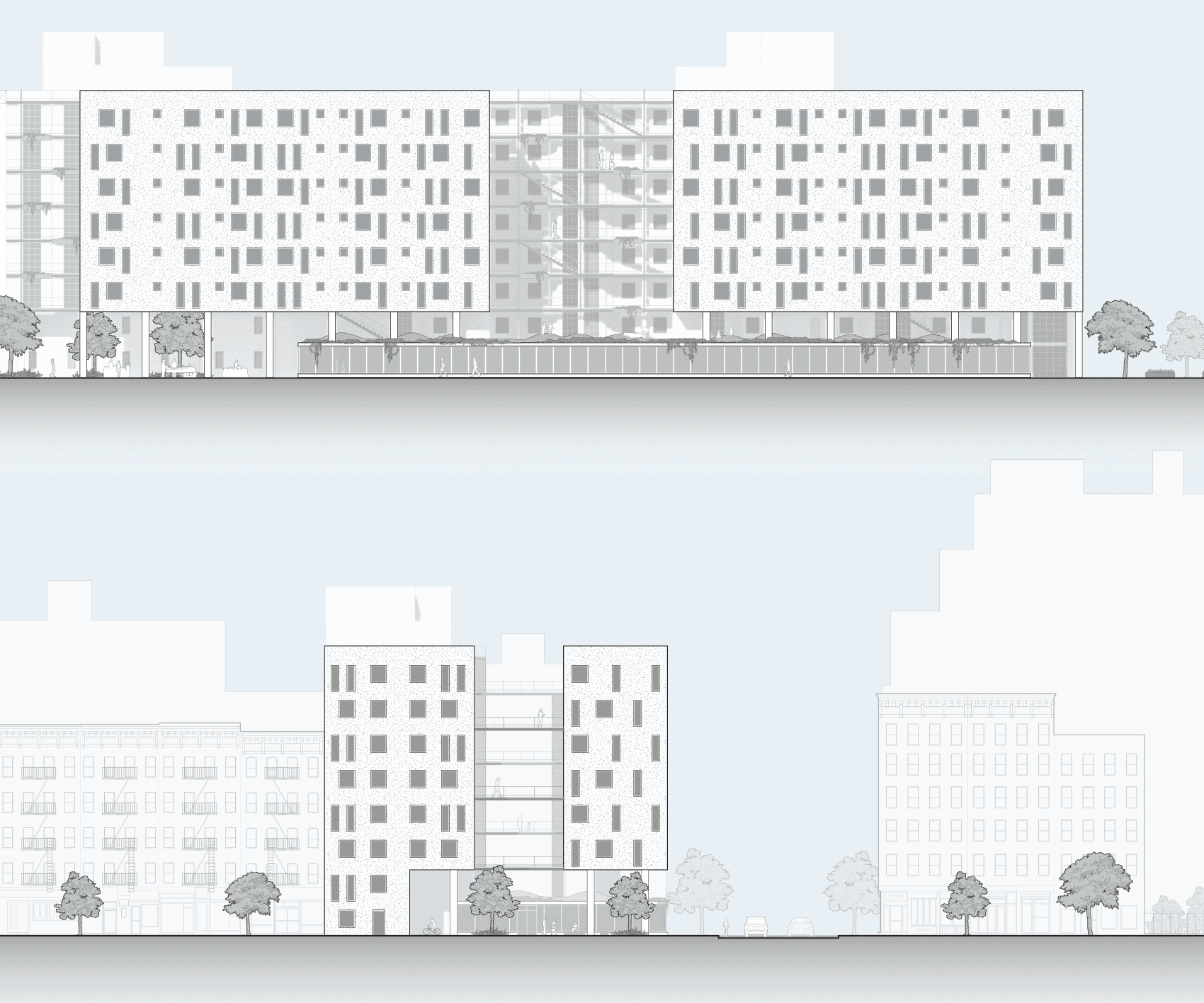
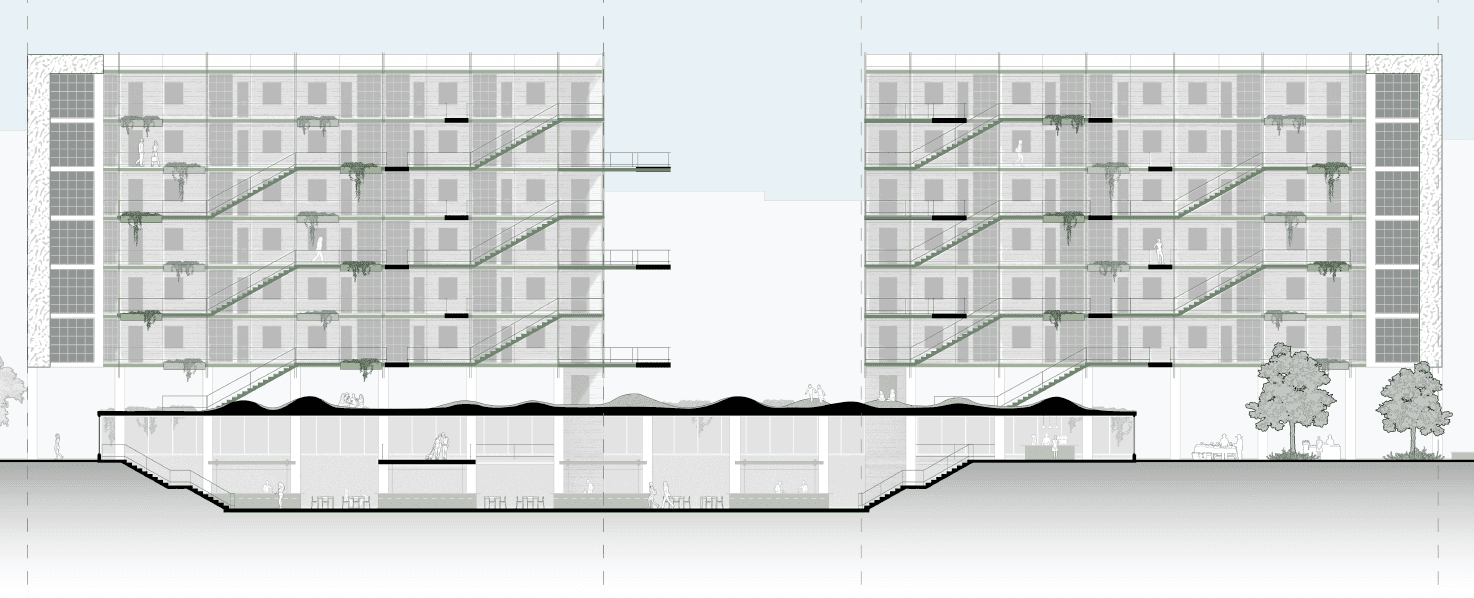
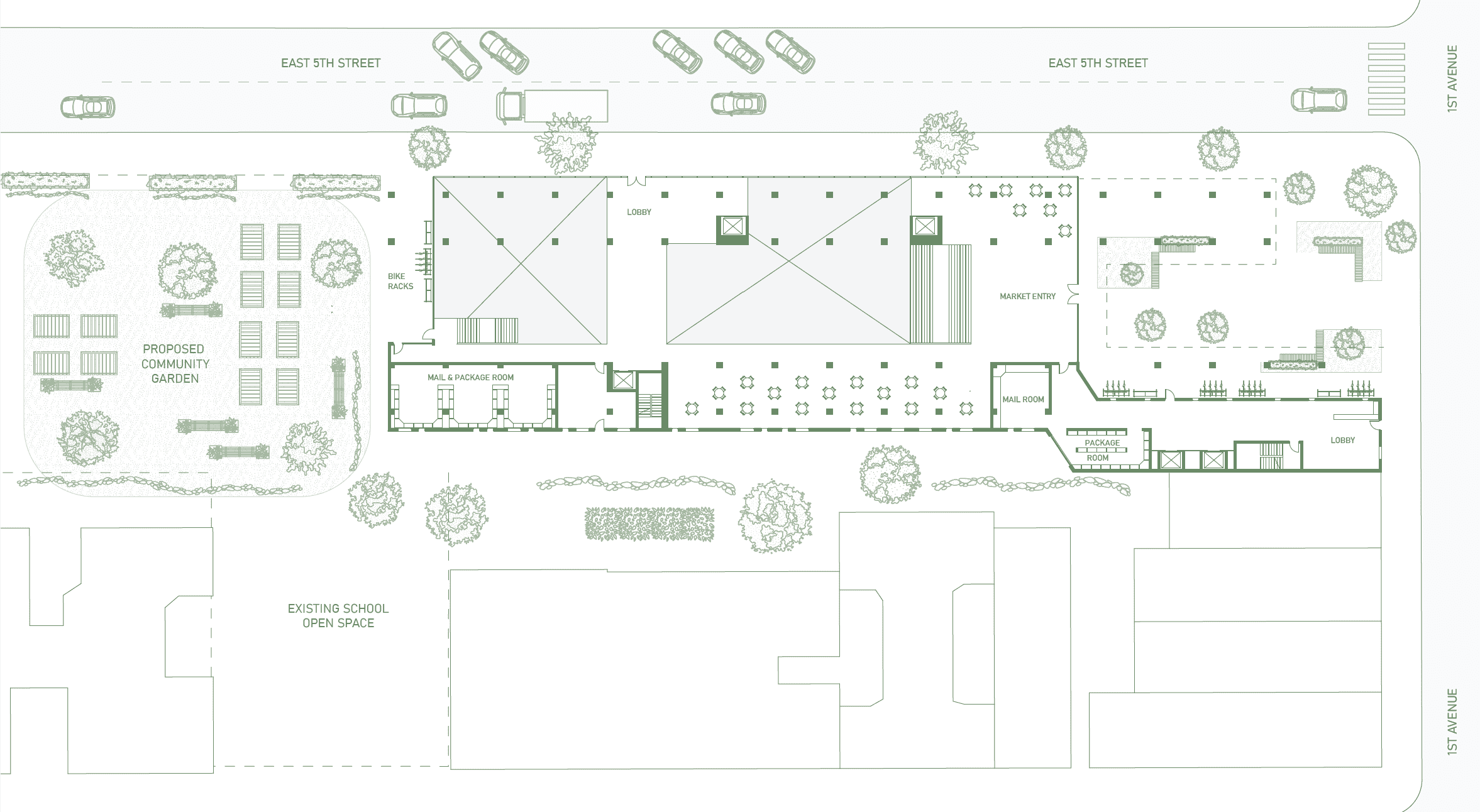
Connections in the Core is an affordable housing community located at the corner of 1st Avenue and East 5th Street in Manhattan’s Lower East Side. The community accommodates high residential density while maintaining access to light, air, and shared green space. The residential volume is lifted on double height pilotis, creating a public plaza that extends seamlessly to a retail market hall below grade.
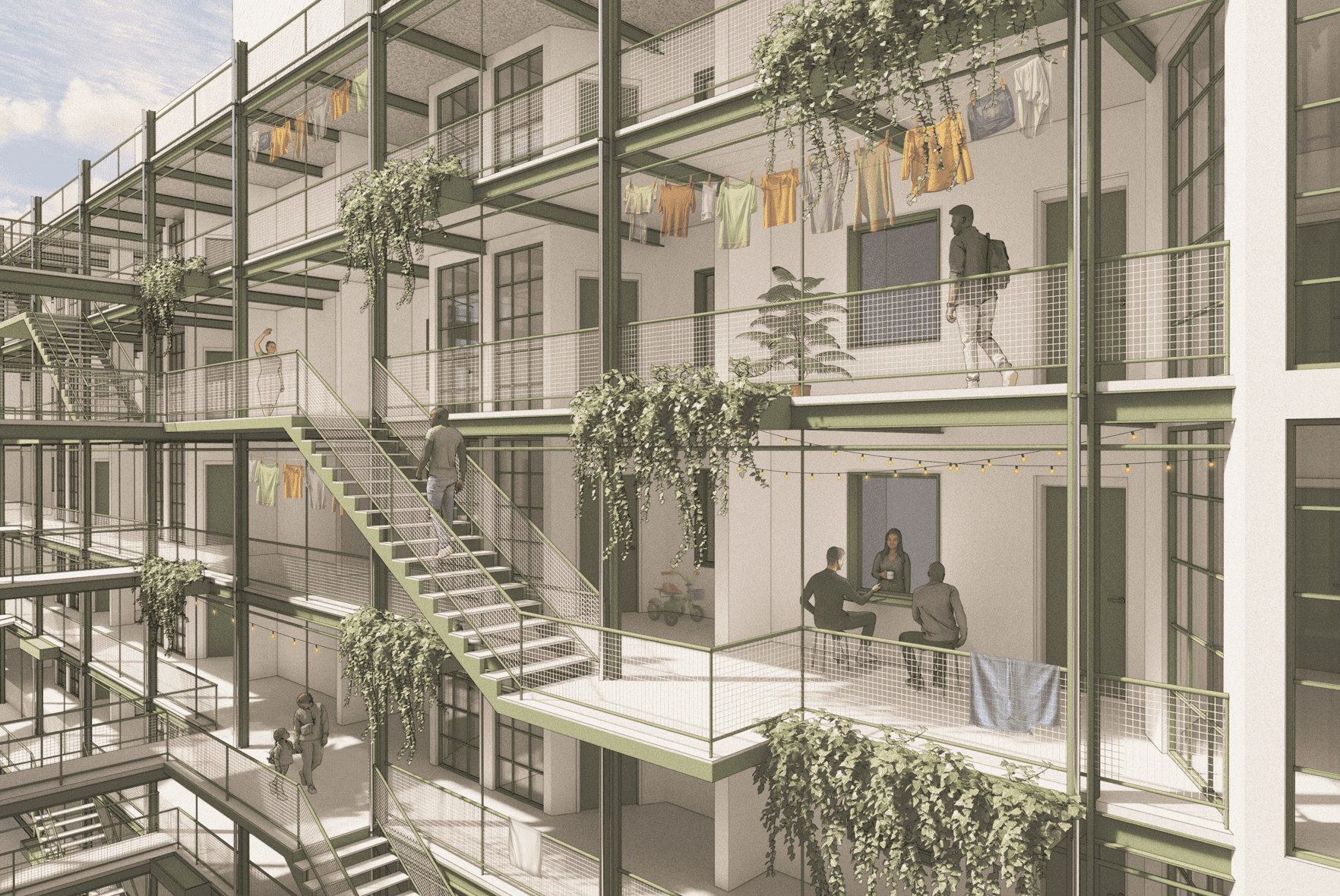
The building massing is conceptualized as tough exterior shell having been pulled apart to expose an inhabited core organized by a vertical streetscape of exterior corridors, bridges, and open air stairs. Kitchen windows and living spaces face these shared circulation zones, allowing everyday activity to extend outward while preserving privacy for bedrooms and bathrooms. The housing community proposes a new model that balances density with openness, and privacy with social interaction, that integrates into the Lower East Side’s urban fabric.
Course | Core III Architecture Studio |
Date | Fall 2025 |
Project Partner | Jessica Smith |
Tools Utilized | Adobe Creative Cloud, Rhino3D, Enscape, Revit |
Site Plan
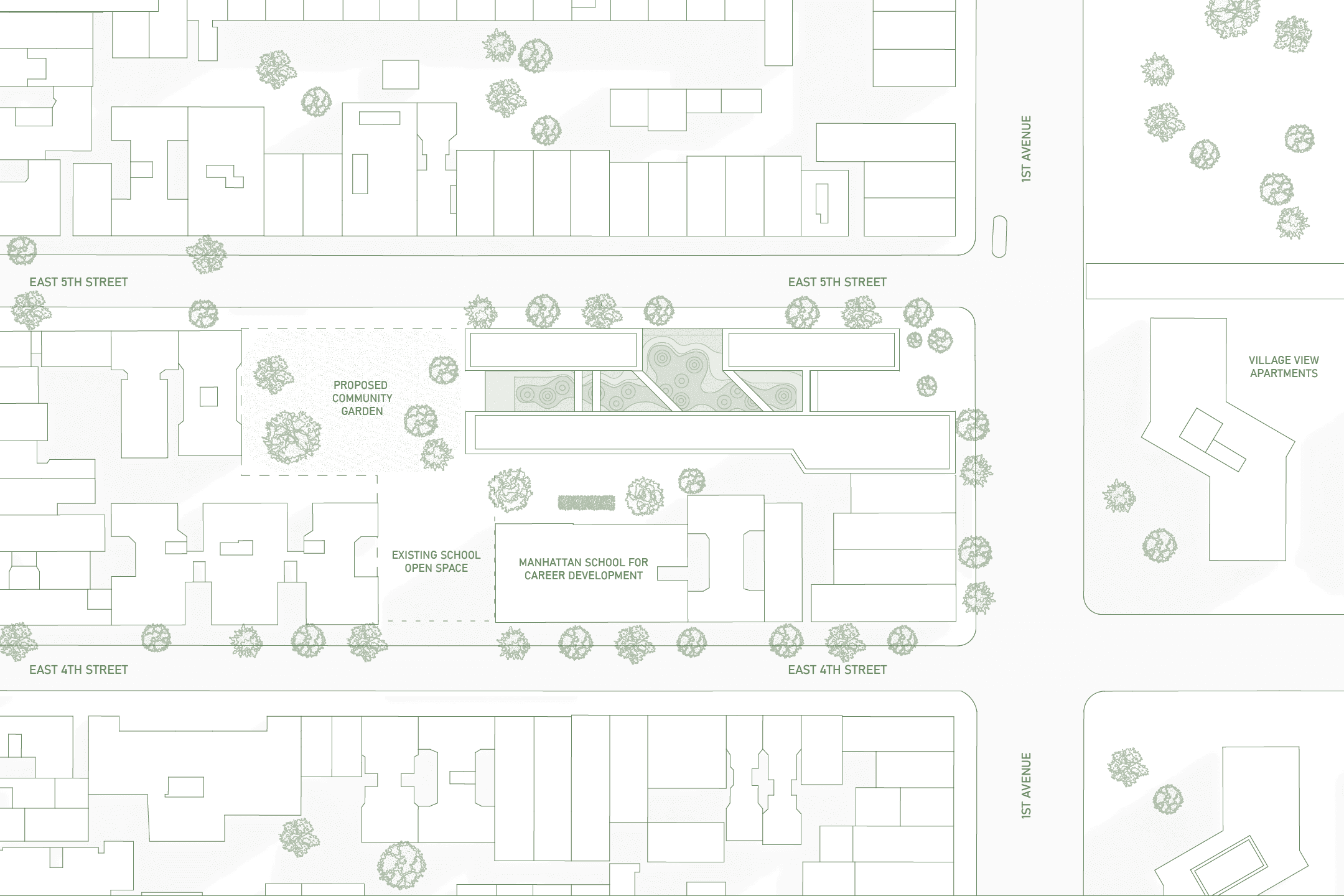
East Village, New York City
The complex occupies a narrow site in the East Village, positioned between a school, and existing Village View Apartments. By incorporating an abandoned pharmacy and adjacent residential buildings into a unified footprint, the plan reframes the community as an active part of the East Village. The result is a spatial framework that supports density while prioritizing community integration.
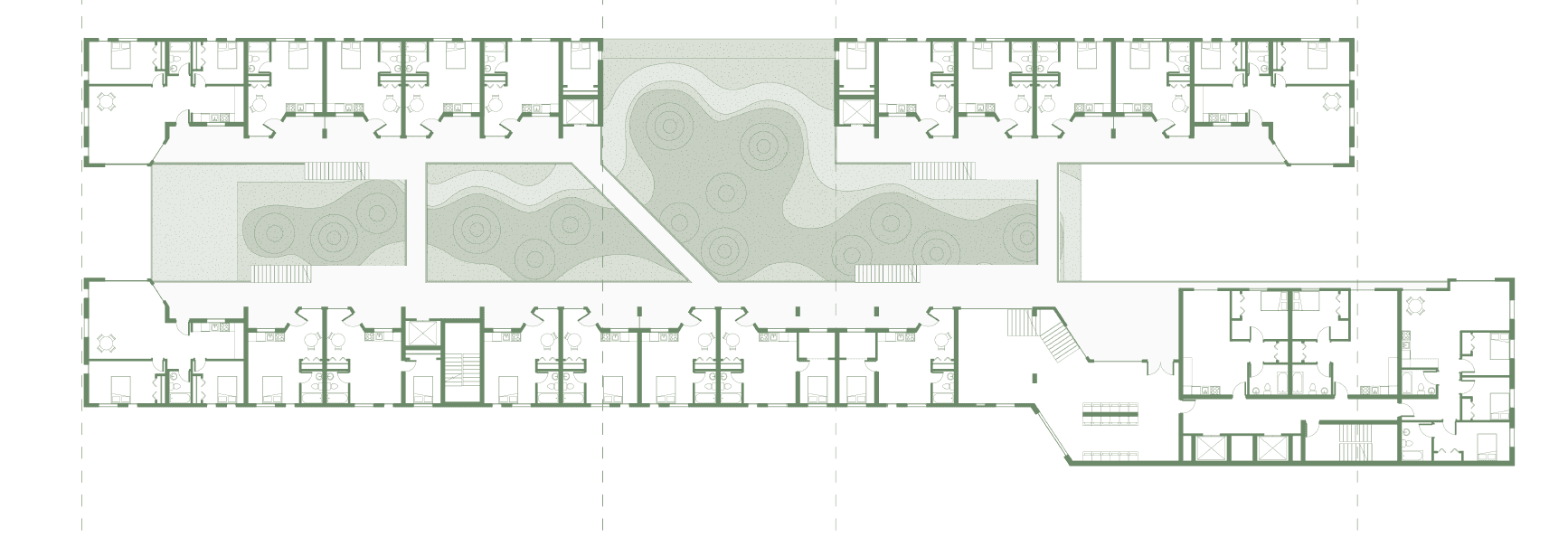
Typical Floor Plan
Each level is organized along long, single-loaded corridors that maximize light, ventilation, and spatial clarity. Kitchens are oriented toward the corridor, positioning everyday domestic activity as a visible and social interface rather than a private back-of-house condition. Auxiliary stairs and sky bridges extend circulation beyond the interior hall, allowing residents to move through the complex in diverse ways for social interaction.
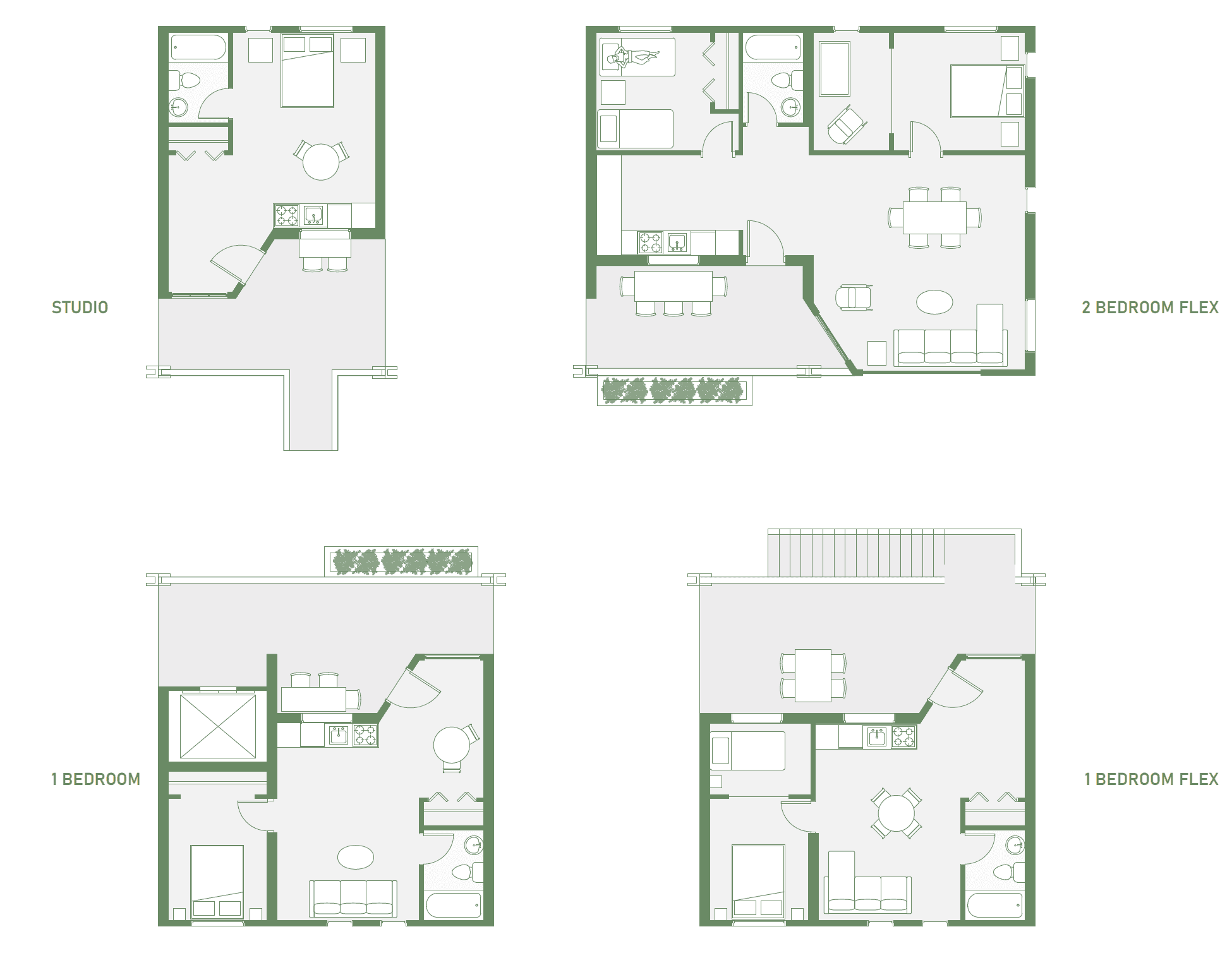
Varied Unit Mix
The building contains over 125 units organized across a diverse range of typologies, (studios, one-bedrooms, one-bedroom + FLEX, two-bedrooms, and a limited number of three-bedroom units). This varied mix supports multiple household structures, from the individuals to multi-generational families, within a single community framework.
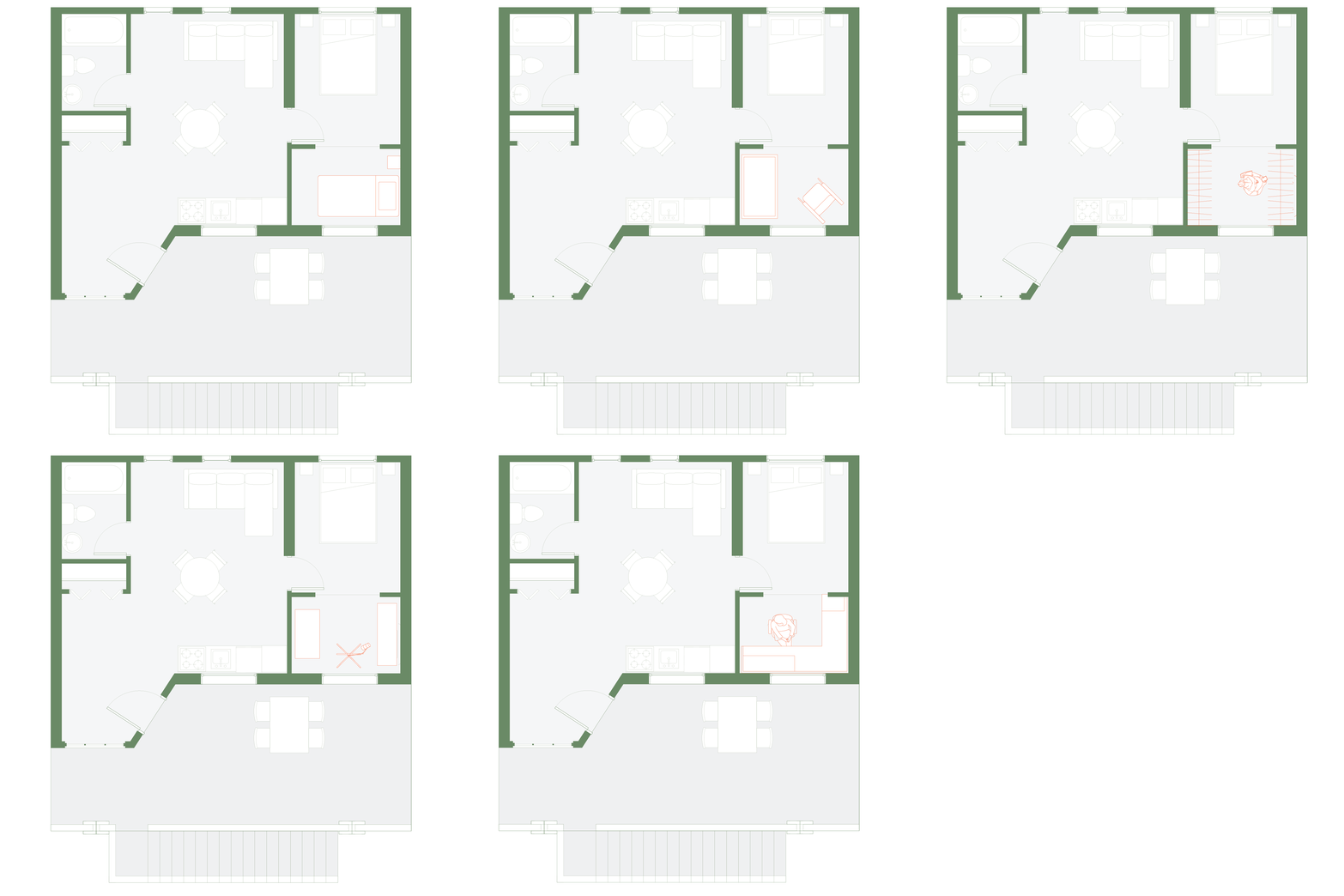
1 Bedroom + FLEX Units
The flex space operates as an open-ended threshold capable of functioning to the needs of the occupant. This animation shows it stylized as an art studio, home office, nursery, walk-in closet, guest bedroom, or additional sleeping area. Rather than prescribing use, the intent is to support constantly changing domestic rhythms within a compact footprint.
A Permeable Core
A permeable central core forms a vertical streetscape within the building. Widened corridor spaces invite residents to gather and interact beyond their units.
Natural light and ventilation move through the open core, transforming circulation into a social and environmental spine.
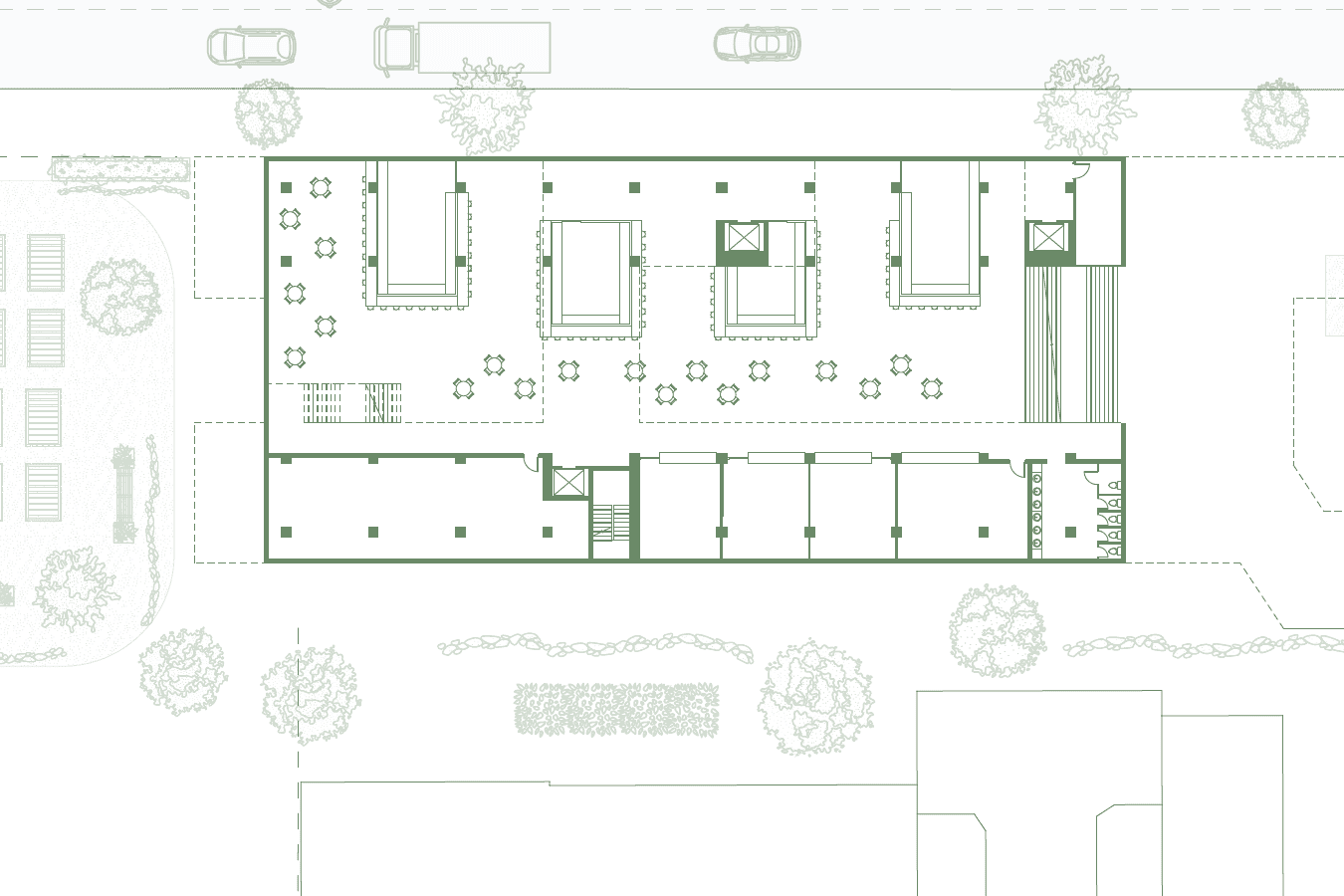
Ground Floor Plan
A permeable central core forms a vertical streetscape within the building. Shared outdoor kitchen spaces invite residents to gather, prepare coffee, and interact beyond their units.
Natural light and ventilation move through the open core, transforming circulation into a social and environmental spine.
Urban Market Place
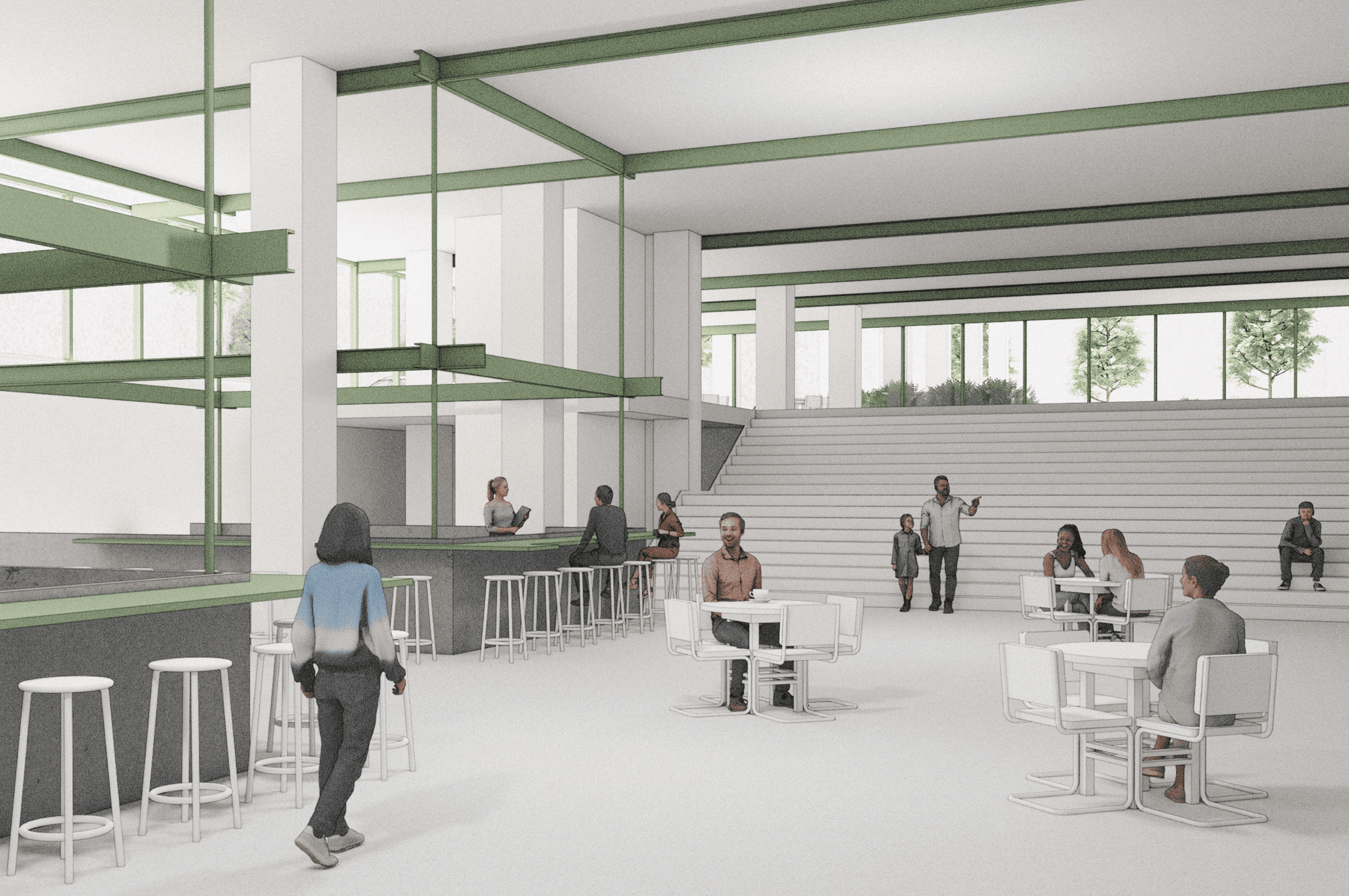
The marketplace provides space for local food vendors and small-scale merchants, embedding neighborhood commerce within the building’s daily rhythm.
Market Plan
Positioned partially below-grade, it supports walkable access to fresh goods while reinforcing the local economy.
As both amenity and gathering space, the market strengthens ties between residents and the surrounding community.